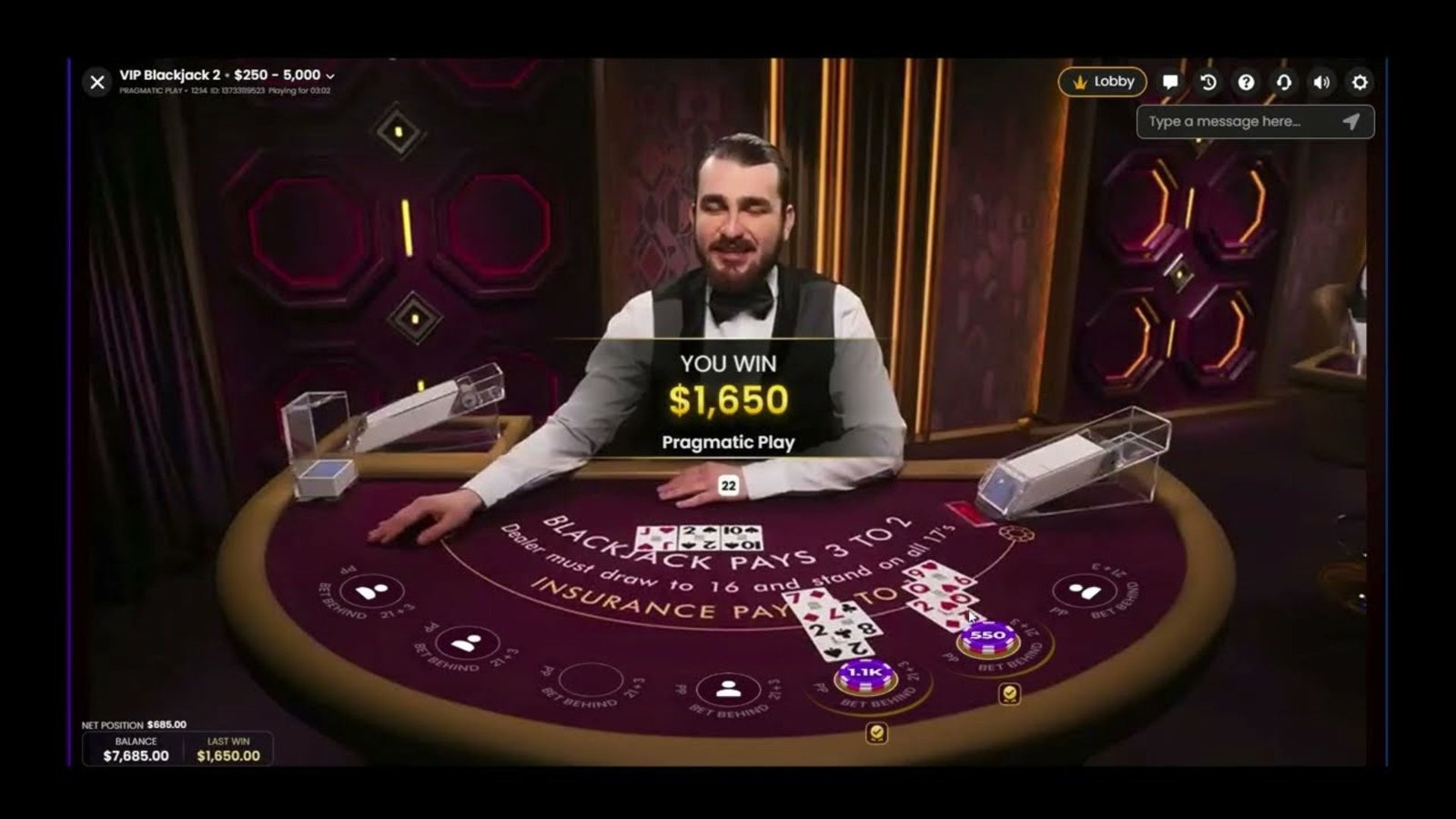





Understanding when to split or stand is one of the most misunderstood parts of blackjack strategy. Many casual players assume splitting always increases winning potential. However, the blackjack splitting edge tells a very different story, especially when dealing with pairs of fives and tens.
At first glance, splitting seems like an opportunity to “double your chances.” In reality, some pairs should almost never be broken apart. That principle becomes especially important in high-speed live environments where mistakes compound quickly.
Players exploring jackpotjill casino often encounter multiple blackjack rule sets where splitting decisions directly impact long-term bankroll performance. Understanding the mathematics behind these decisions can significantly improve consistency and reduce avoidable losses.
This jackpot jill Review: Online Blackjack guide explains why hard tens and pairs of fives are statistically stronger when left intact, how splitting impacts expected value, and why disciplined players avoid emotional decisions in modern blackjack environments.
Why Pair Splitting Matters in Blackjack Strategy
Pair splitting is one of the most powerful tools in blackjack. However, it must be used selectively.
When you split a pair, you:
- Create two separate hands
- Double your total wager
- Increase exposure to variance
That combination can either improve or weaken your expected outcome depending on the starting hand.
The blackjack splitting edge becomes most visible when analyzing non-intuitive pairs like 5s and 10s.
The Truth About Splitting Tens
A pair of tens equals a hard 20. That is already one of the strongest possible hands in blackjack.
Why Hard 20 Is Statistically Powerful
Hard 20 performs exceptionally well because:
- It beats most dealer outcomes
- It only loses to 21
- It rarely needs improvement
Breaking that hand introduces unnecessary risk.
What Happens When You Split Tens
When players split tens, they convert a guaranteed strong hand into two weaker starting points.
For example:
- Original: Hard 20
- After split: Two hands starting with 10
Each new hand must build value again, often from weaker positions.
Therefore, the blackjack splitting edge strongly favors keeping tens together in nearly all standard rule sets.
jackpot jill Review: Online Blackjack Table Strategy Context
Modern blackjack environments have made strategic understanding even more important. Fast-paced gameplay increases the chance of rushed decisions.
Many users playing jackpot jill real money online blackjack tables appreciate structured strategy because live dealer speed leaves little time for hesitation.
Key platform features include:
- Rapid live dealer rounds
- Multiple blackjack variants
- Mobile-optimized interfaces
- Consistent table availability
- Fast withdrawal processing
However, speed also increases the risk of emotional splitting decisions, especially on strong hands like tens.
Why Pair of Fives Should Also Not Be Split
At first, a pair of fives looks weak. The total value is only 10.
Many beginners instinctively want to split. However, this is one of the biggest strategic mistakes in blackjack.
Why Hard 10 Is Stronger Than It Looks
A hard 10 has excellent flexibility:
- It can double into 20
- It rarely busts when improved
- It benefits from strong doubling opportunities
This flexibility is the core of its strength.
What Happens When You Split Fives
Splitting fives creates two hands starting at 5 each.
That leads to:
- Weak starting positions
- Limited immediate value
- Higher reliance on drawing perfect cards
As a result, expected value drops significantly.
The blackjack splitting edge clearly favors keeping fives together and treating them as a strong doubling opportunity instead.
The Mathematics Behind Hard 10 Strategy
Hard 10 is one of the most profitable doubling hands in blackjack.
Why Doubling Beats Splitting
When you double a hard 10:
- You invest once
- You aim for a strong 20
- You maximize return efficiency
When you split instead:
- You invest twice
- You create weaker hands
- You increase variance without improving odds
Therefore, doubling or standing often provides better long-term value than splitting.
Emotional Mistakes in Splitting Decisions
Blackjack is not only mathematical. It is also psychological.
Many players make splitting mistakes because:
- They dislike weak totals
- They chase “more chances”
- They react emotionally after losses
Unfortunately, emotional splitting weakens bankroll performance quickly.
The blackjack splitting edge is strongest when decisions remain calm and rule-based rather than impulsive.
Why Live Blackjack Makes Splitting Harder
Live dealer blackjack increases pressure due to:
- Fast decision timers
- Real-time dealer interaction
- Visible chip movements
- Continuous gameplay flow
These factors encourage rushed decisions, especially on borderline hands.
Players who fail to slow down often split hands incorrectly, particularly 10s and 5s.
Key Strategic Rule: Never Break Strong 20s
Hard 20 is one of the strongest final hands in blackjack.
In almost all scenarios:
- Standing is optimal
- Splitting reduces expected value
- Doubling is unnecessary
Even slight improvements from splitting do not justify the loss of guaranteed strength.
The blackjack splitting edge reinforces this principle strongly.
When Hard 10 Becomes a Power Hand
Unlike many weak totals, hard 10 offers exceptional flexibility.
Ideal Actions With Hard 10
Players typically:
- Double against weak dealer upcards
- Stand against strong dealer positions
- Avoid splitting entirely
This balanced approach maximizes expected value over time.
Hard 10 is often underestimated, but mathematically strong when used correctly.
Common Splitting Errors Players Make
Many blackjack mistakes come from misunderstanding pair value.
Splitting Tens Due to “Greed”
Some players split tens hoping for:
- Two blackjacks
- Higher total wins
- Bigger payouts
However, this approach sacrifices guaranteed strength.
Splitting Fives Out of Fear
Other players split fives because they fear weak totals.
Ironically, this reduces their strongest option: doubling into 20.
Both behaviors weaken long-term performance.
jackpot jill Review: Online Blackjack Decision Speed
Fast-paced blackjack environments demand instant decision-making.
Players must quickly evaluate:
- Dealer upcard strength
- Hand flexibility
- Risk vs reward balance
In such environments, pre-learned strategy becomes essential.
Disciplined players rely on structured rules rather than guessing during live rounds.
How to Improve Splitting Discipline
Strong blackjack players build consistent habits.
Effective Techniques
- Memorize core pair rules
- Avoid emotional decisions
- Use basic strategy charts initially
- Focus on expected value, not intuition
These habits reinforce the blackjack splitting edge consistently.
Why Basic Strategy Still Wins Long-Term
Basic strategy exists for one reason:
To minimize house edge over time.
It consistently shows:
- Do not split tens
- Do not split fives
- Use hard 10 for doubling
Following these rules improves long-term stability.
The Role of Bankroll Management
Even perfect strategy fails without bankroll discipline.
Strong players:
- Set session limits
- Avoid over-betting
- Stick to unit sizing
- Accept variance calmly
These practices prevent short-term emotional losses from escalating.
Final Thoughts on Pair Splitting Strategy
Splitting is one of the most powerful mechanics in blackjack, but only when used correctly. Misusing it can quickly reduce expected value and increase variance unnecessarily.
The blackjack splitting edge clearly shows that:
- Tens should remain together as hard 20
- Fives should remain intact as a strong doubling hand
- Emotional splitting reduces long-term success
This jackpot jill Review: Online Blackjack guide demonstrates why disciplined decision-making matters more than aggressive splitting behavior. In modern live blackjack environments, where speed and pressure are high, sticking to mathematically sound strategy is essential.
Players who respect these rules consistently outperform those who rely on instinct alone.
Ultimately, blackjack success comes from precision, not aggression and nowhere is that clearer than in splitting strategy.
Author: Lynn